


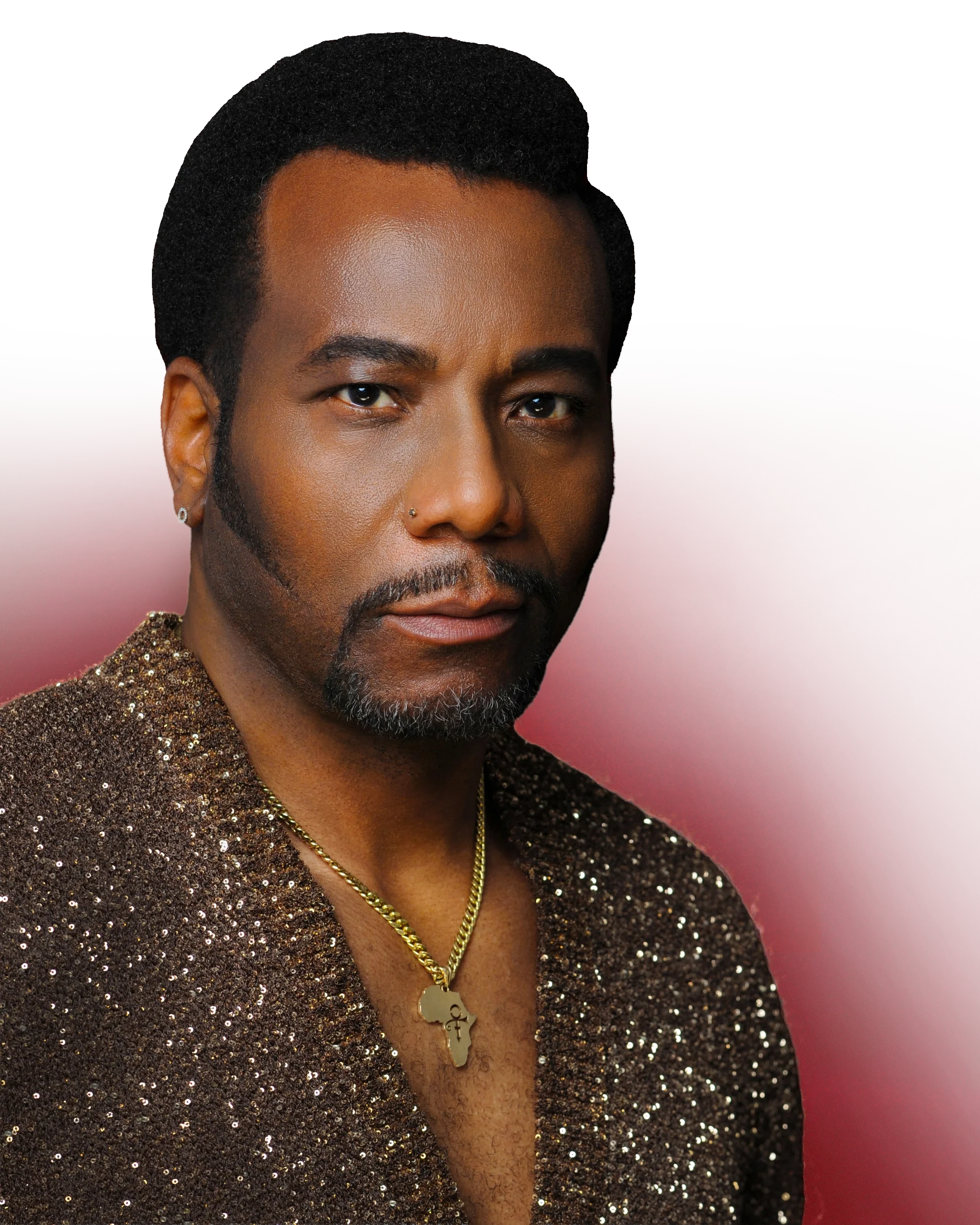
Martin Luther McCoy
Martin Luther McCoy’s first memory of sound is not a record, or a stage, or even a song with words. It is his grandmother, Ruby Mae Watkins, holding him against her chest and humming.
-
He still describes that sound in physical terms: deep, rich, profound, thick as molasses. Ruby Mae was a revered singer in Marshall, Texas, called upon for funerals, weddings, graduations, moments of mourning and celebration alike. She was, in his words, “the voice of Marshall, Texas,” a woman whose singing belonged to the life of the community. That gift moved through the family - into Martin’s father, Harold, into his siblings, and eventually into him - long before he had any language for what he might do with it.
Born in San Francisco in 1970 and raised in the city’s Lakeview-Ingleside area, McCoy came of age surrounded by a distinctly Bay Area mix of influences: church choirs, neighborhood grit, family harmonies, and a local musical lineage that stretched from Sly Stone to the city’s rap pioneers. His older brother played a huge role in shaping his ears, while his own instincts pulled him in unusual directions early. As a child, he would hear church standards and unconsciously start revising them, changing melodies and phrasing because that was simply how the music arrived in him. By five, he was already writing songs. By his teens, he could build them from the inside out - verses, choruses, bridges, arrangement ideas - even without formal training in theory.
The guitar became central to that process, though it was hardly the obvious choice. In the neighborhood where he was raised, guitar was viewed as somebody else’s instrument, something outside the accepted codes of Black popular expression at the time. McCoy picked it up anyway. He had already fallen hard for Prince, and he knew the instrument would give him a way to compose the music he heard in his head. If he could not always explain the chords academically, he could sing every part, every harmony, every rhythmic turn, then find the technology to bring it to life.
That instinct - to build his own language rather than wait for permission - has shaped his entire career.
McCoy studied at Morehouse College, where he pursued media communications while also studying entertainment law and advertising. Those years brought him into contact with future collaborators, including multidisciplinary artist Sanford Biggers, whose creative relationship with McCoy has now stretched across decades. After college, McCoy moved through music, fashion, production, and independent entrepreneurship with the same restless sense of possibility. He started his own company, Beyond Entertainment, in the 1990s, which later evolved into Rebel Soul Records and, eventually, into a larger philosophy: Rebel Soul Music.
That phrase has followed him for years, and with good reason. It captures something essential about McCoy’s refusal to flatten himself into one lane. His music draws from gospel, soul, funk, rock, hip-hop, folk, and social commentary, all filtered through a voice that feels church-honed and road-tested at once. He emerged during the broader neo-soul era, yet never fit neatly inside it. He was too invested in songcraft, too focused on message, too committed to the full range of Black musical expression to settle for somebody else’s framework. So he built his own.
What that meant in practice was a career that often moved differently than the moment around it. While others were able to specialize, delegate, or plug into established systems, McCoy carried much of the creative and structural weight himself - writing, producing, shaping, and sustaining his work independently. It gave him freedom. It also came at a cost, stretching timelines and pushing certain breakthroughs further into the distance than they might have been otherwise. The work never stopped. It just unfolded on its own terms.
The wider world encountered him in flashes that, taken together, begin to suggest the scale of his path: touring with The Roots after a chance audition in Philadelphia; collaborating in the orbit of artists like Cody Chesnutt, Erykah Badu, and Saul Williams; landing the role of Jojo in Julie Taymor’s Across the Universe; appearing in film, television, and theater; performing with SFJAZZ Collective; co-founding Moon Medicin with Biggers; stepping into Bay Area cultural life again and again in ways both visible and foundational. Yet for all those chapters, McCoy has remained committed to a broader artistic identity - one that extends beyond music into a larger, more fluid creative practice, even when that hasn’t always been the easiest story for the industry to categorize.
Welcome Back Love, out Friday, July 17th, arrives from that hard-won perspective. It is the first album McCoy has released since Love Is the Hero, and it carries the weight of everything that has happened in the years between. Marriage changed him. Loss changed him. Responsibility changed him. So did time. He speaks now with the clarity of someone who has lived through enough to stop mistaking noise for purpose.
The title came into focus through a piece of artwork by Pierre Bennu that McCoy and his wife received when they married - an image he held onto for years, waiting for the right album to match its feeling. In the end, the title became a way of naming his own return: back to the record business, back to his audience, back to a mode of expression he felt the culture had drifted from. In McCoy’s telling, love is not a soft theme or a sentimental one. It is a force, a discipline, a source. It is what survives after money, ego, sex, and fame have burned off. It is also, he believes, something modern culture has steadily moved away from - something that now requires intention to bring forward again.
That belief runs through the album in different forms. “Peace of Mind,” which won the 2025 Gospel Choice Music Award in the Gospel Afrobeats category, grew out of the psychic strain of waiting, pivoting, and trying to keep faith while a life in music unfolds on its own timeline. “Now” is McCoy leaning into simplicity and sensuality, a slow jam in the classic sense, written to capture the urgency of immediate desire.
“Reimagine the World” channels his lifelong attraction to artists like Gil Scott-Heron, Bob Marley, Stevie Wonder, Prince, and Sting - musicians who understood that songs can carry civic, spiritual, and emotional weight all at once. “Fear or Faith” reaches toward the loss of his older brother, whose presence shaped McCoy’s musical identity and whose absence left a lasting mark. Across the album, there is a consistent impulse to take what feels fractured or heavy and reshape it into something that offers direction, clarity, or lift.
Taken together, these songs make a persuasive case for what McCoy has always believed music can do. It can heal. It can challenge. It can seduce, testify, grieve, and galvanize. It can function as a kind of language beneath language - something felt as much as understood. It can return people to themselves.
For Martin Luther McCoy, that has always been the work. Welcome Back Love finds him stepping forward with renewed intention - not reinventing who he is, but presenting it more clearly. After decades of building, surviving, searching, and recommitting, he remains committed to the same core idea that first shaped him: that sound, when used with purpose, can connect, restore, and move people in ways nothing else can.
He is still reaching for what he heard in Ruby Mae Watkins’ hum all those years ago - sound as communion, sound as medicine, sound as a way through.
Dive Into Martin Luther McCoy
Martin Luther McCoy has been in the music industry since the early 90s new soul movement. He stands with the legends D’Angelo to Maxwell to Erykah Badu. His music is timeless R&B funkadelic reggae with a twist of rock and roll to it. He has toured with The Roots and now has a new album out July 17, his first LP in over 14 years, called Welcome Back Love.
Story Behind the Artist
Born in San Francisco, the singer, songwriter, producer, and actor writes music with his heart on his sleeve. The first single, is the afrobeat funky “Peace of Mind” is indicative on how he deeply he wants to connect his lyrics with the public. I talked to suave McCoy about his experiences growing up in San Francisco, the 90s new soul movement, and what’s up next

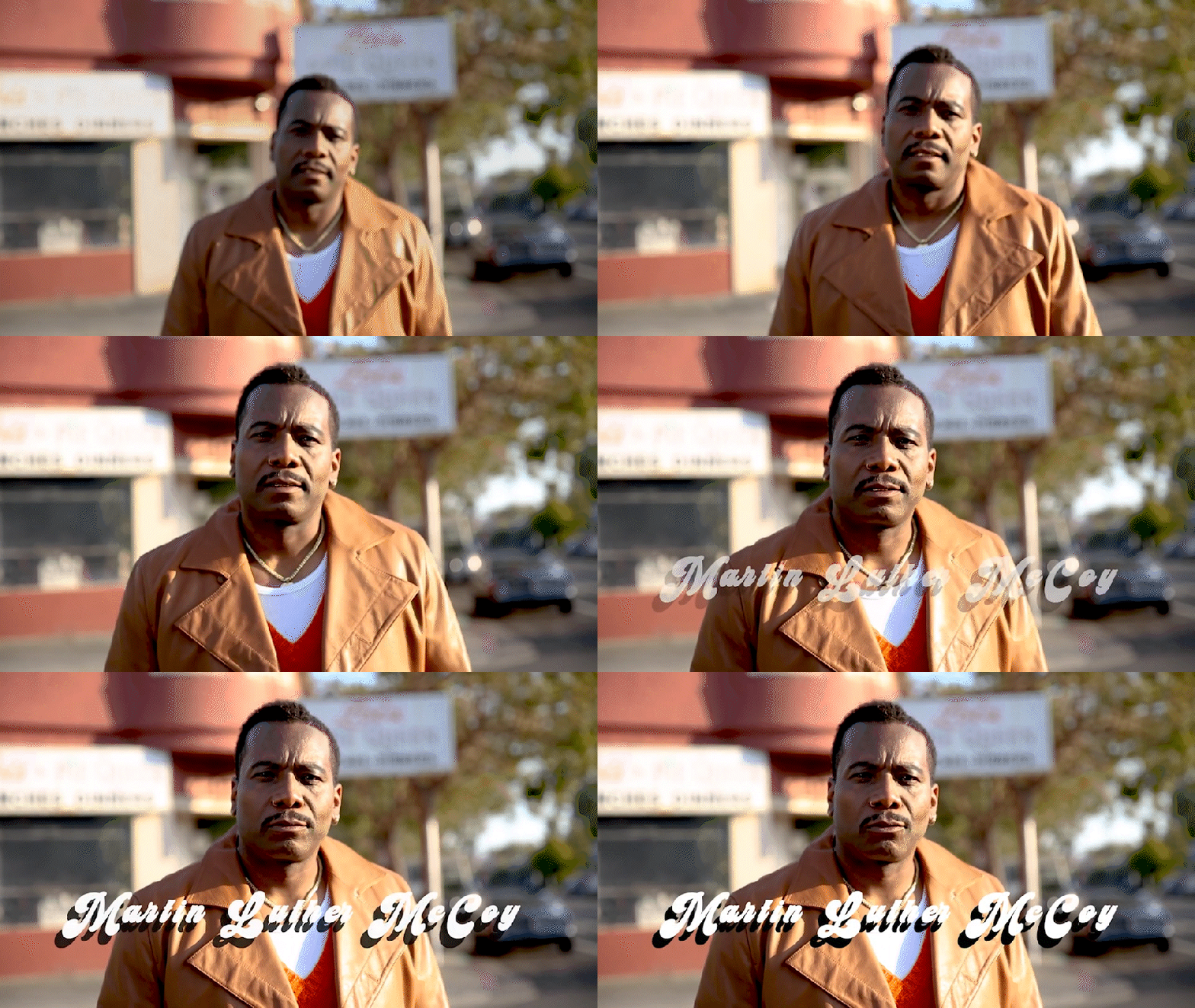
Rhythms of the Bay: Featuring Martin Luther McCoy
As we celebrate Black History Month, we honor the artists who continue to shape culture through music. Martin Luther McCoy, a San Francisco native, is one such artist—channeling the soul of his musical family influence into every note he sings.
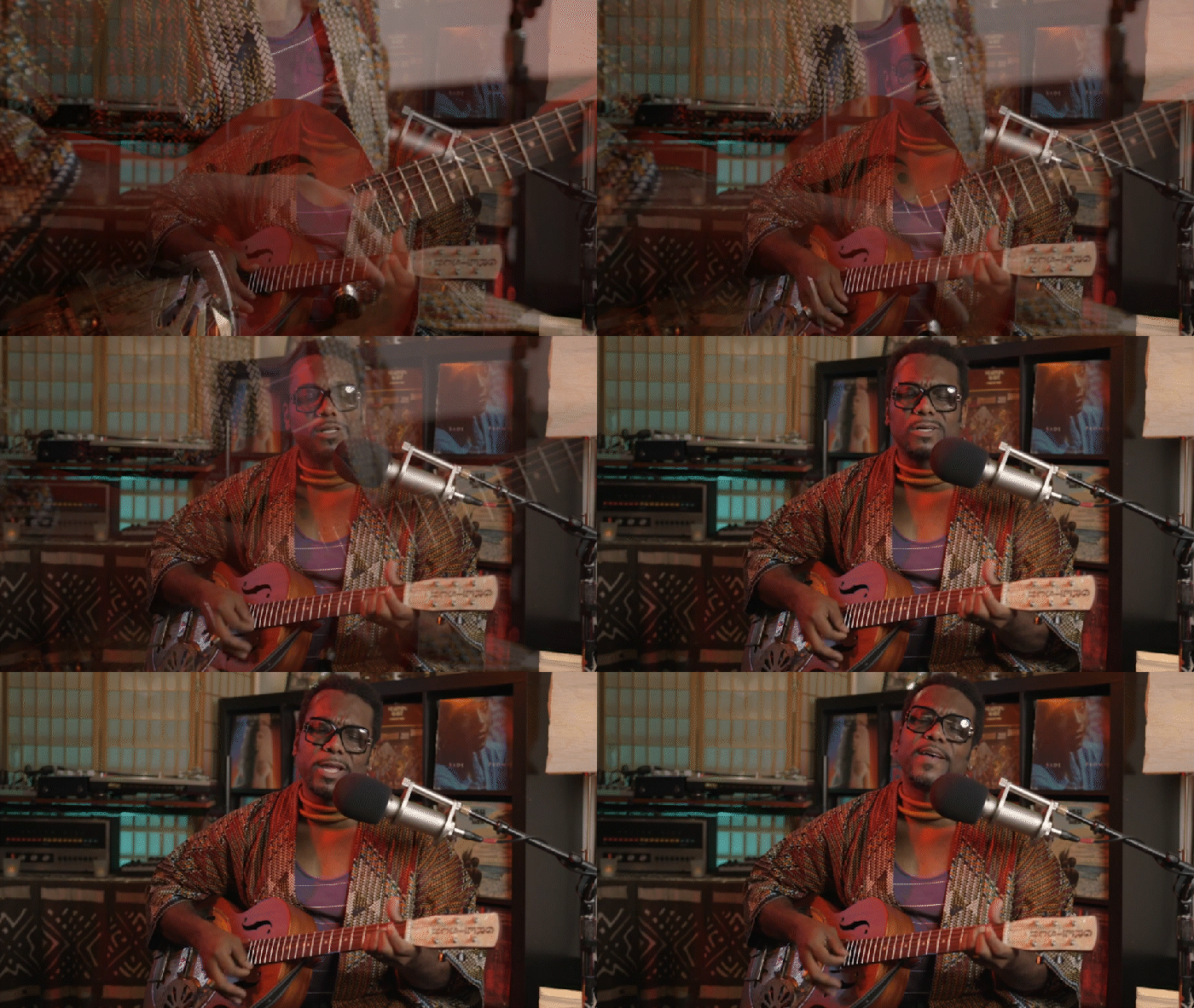
Martin Luther McCoy | SF Band | Live Performance at Balanced Breakfast’s Showcase
Martin Luther McCoy was born and raised in San Francisco, Ca. He is a genre-blending acoustic soul singer equally inspired by Neil Young and Parliament-Funkadelic. His black boy joy is easily observed when he performs, accompanying himself on guitar
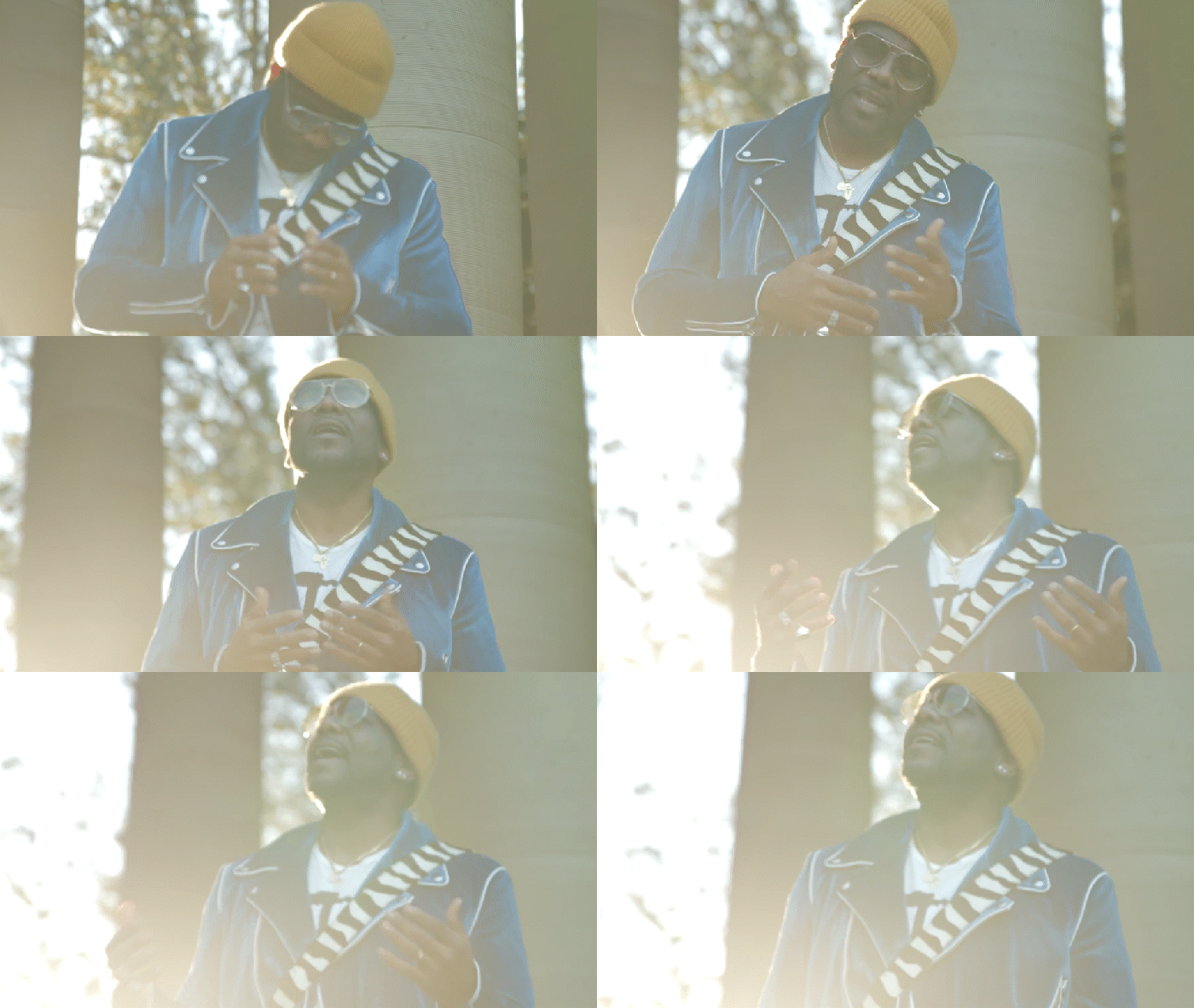
Martin Luther McCoy - Lift Every Voice and Sing
Filmed in San Francisco at the historic band shell in Golden Gate Park, this version of the Negro National Anthem was produced by Warren Wolf featuring lead vocal and guitar work by Martin Luther The Real McCoy.
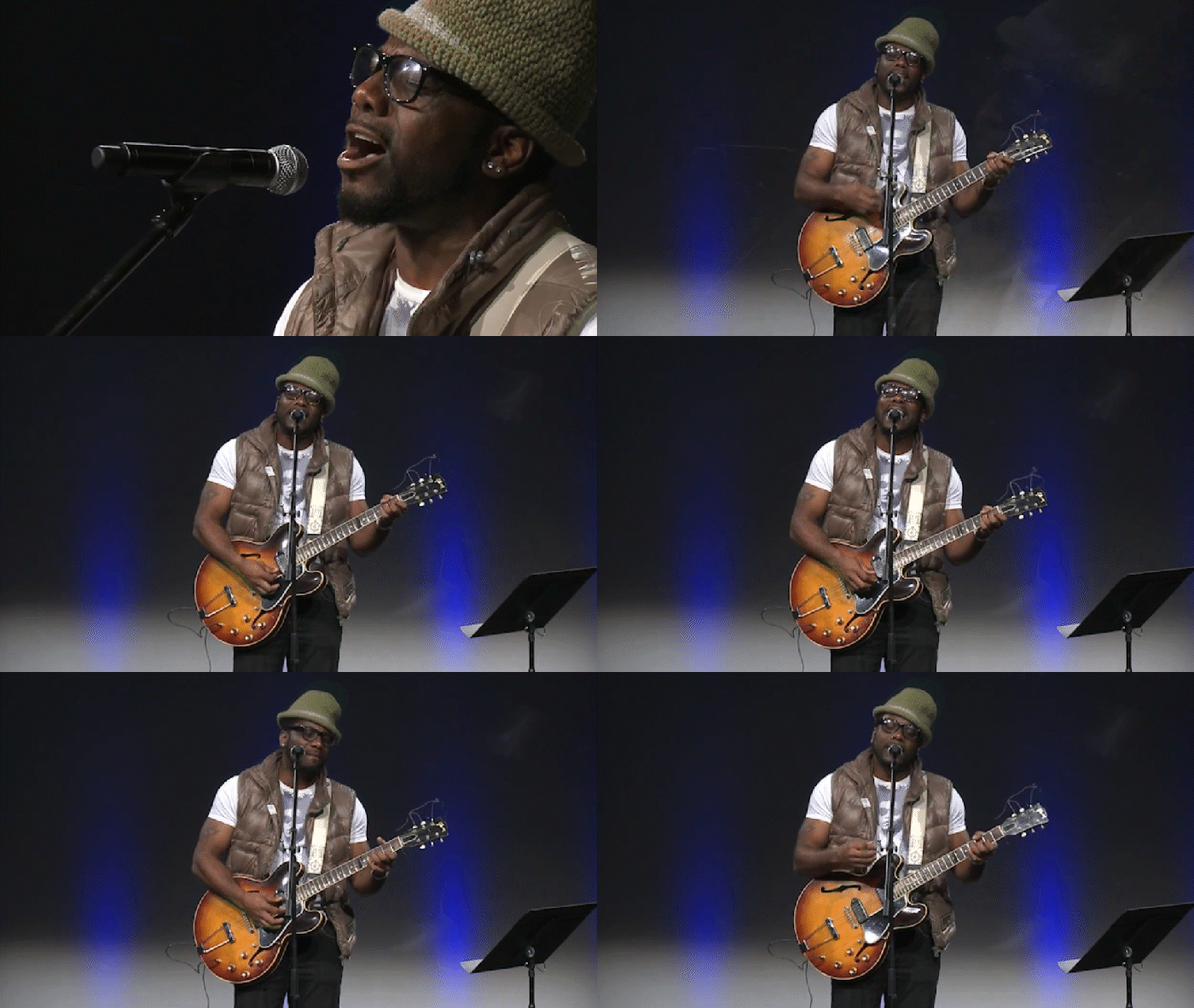
Martin Luther McCoy - 1 - TEDxMission
Rebel soul music to ears thirsting for truth, funk, rock and soul, Martin's gorgeous tenor voice captivated the hearts of audiences worldwide with his ubiquitous cover of George Harrison's Beatles White album classic, 'While My Guitar Gently Weeps" in the film Across the Universe.
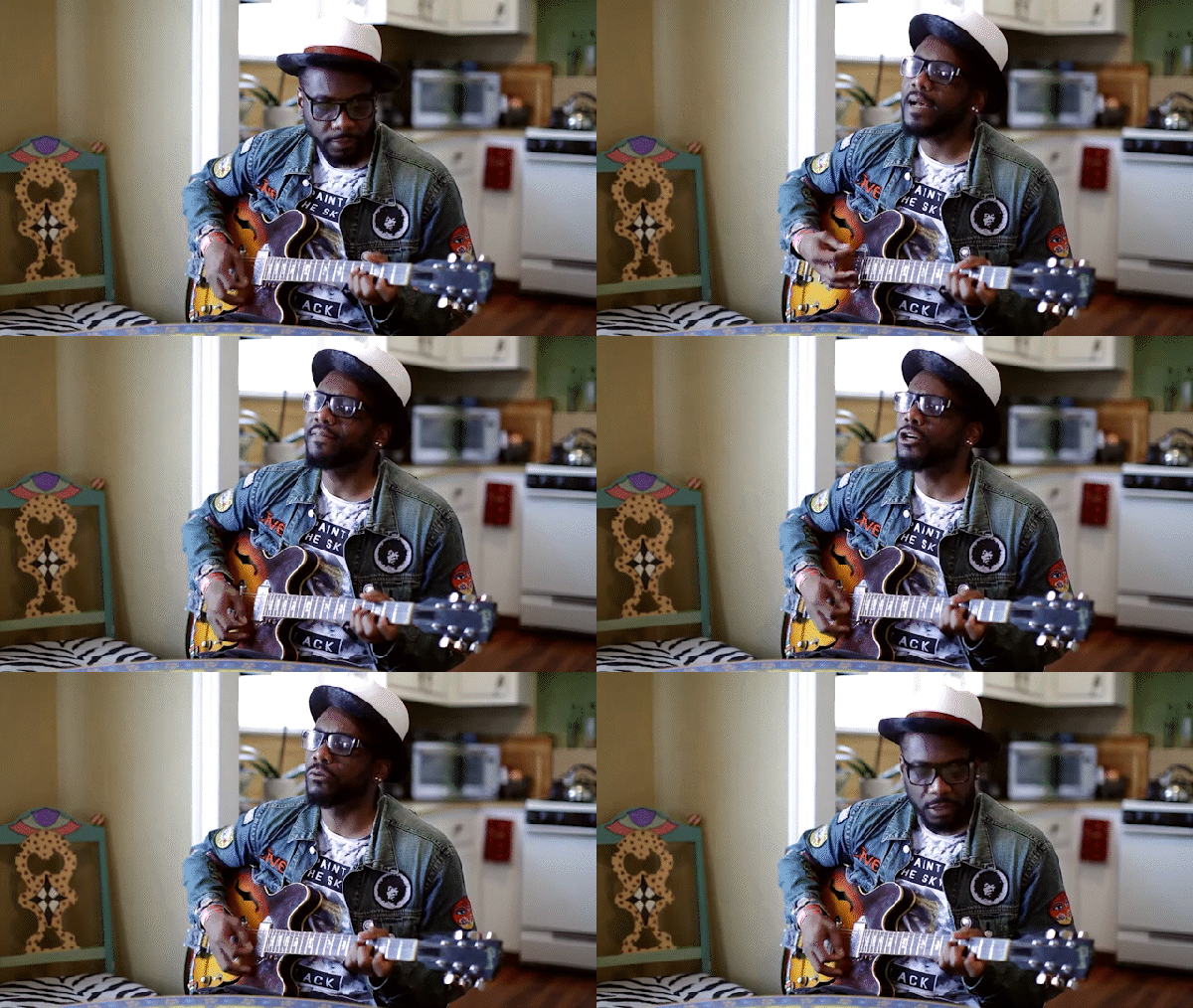
Martin Luther McCoy - Somebody Superstar (opbmusic)
Martin Luther McCoy performs "Somebody Superstar" for opbmusic during SXSW 2016. Subscribe to our channel to see all our new videos!
Rise by Martin Luthe and Niki Glaspie (Black Stripes) Live At Bardot
Feel the spirit of the Phoenix rise as Niki and ML perform a beautiful rendition of this ML classic to a lively Miami crowd. Anna 222 Worldwide Thank You for rocking with us.